Electric Lies
An artistic intervention into the rhetoric surrounding the green transition in energy production and its displacement of indigenous communities.
What happens to the land when indigenous ways of life are erased for energy expansion?
What lies are circulated to justify it?
An ongoing inquiry led
by Ulv & Ugle

Green Colonialism
in Sápmi:
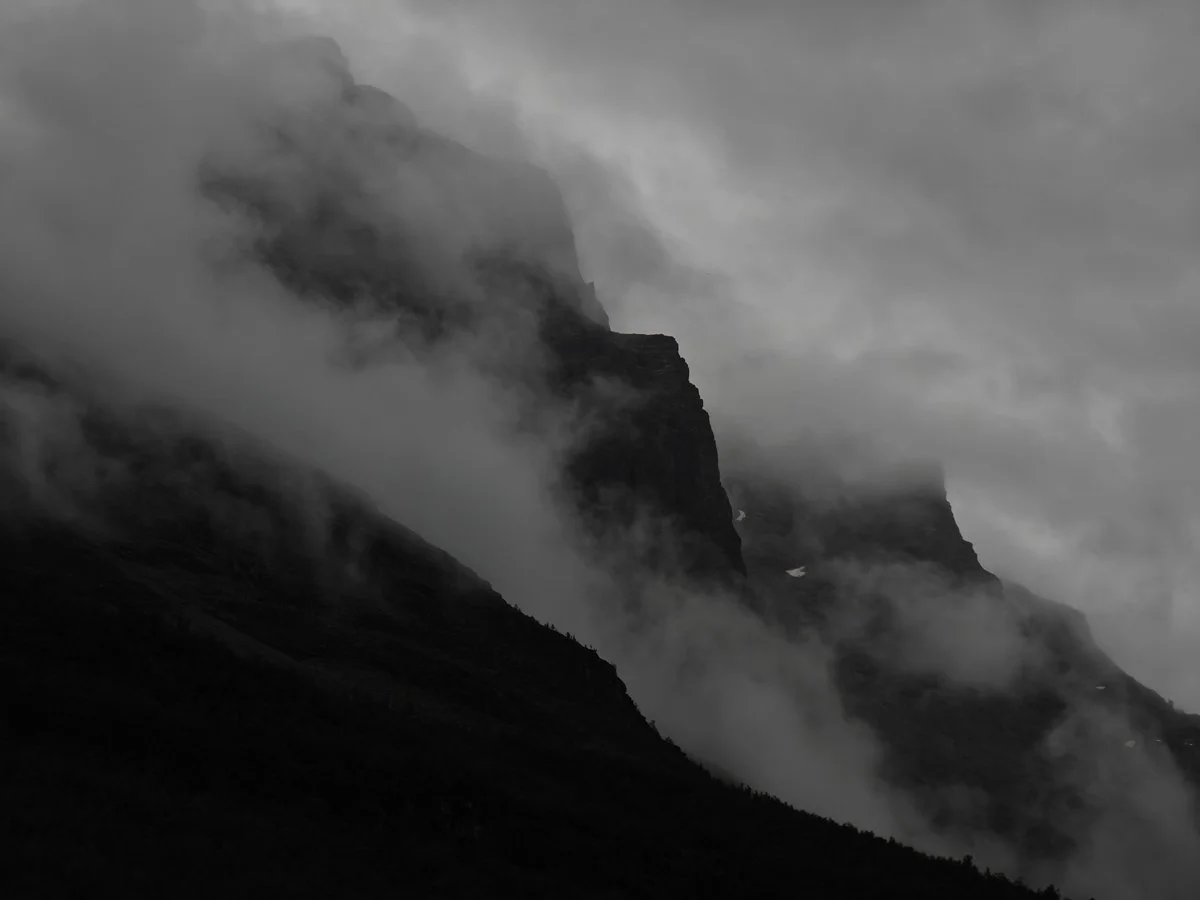
The term "green colonialism" is frequently used by the Sámi as a critique of hegemonic policies against climate change and, in particular, against the expansion of the wind energy industry in Sápmi, their ancestral territory. Colonization and the expansion of capitalism on indigenous lands are the cause of the current climate and ecological crisis.
The Arctic is suffering the highest temperature increase in the world due to climate change, posing serious threats to Sámi health, livelihoods and culture. Throughought the history of colonial occupation across Sapmi, Sami people have been subjected to brutal assimilation tactics which amount to genocide, including bans on cultural practices, forced sterilisation, and forcing children into residential schools where they were separated from their communities.
A close connection to the lands that Sami people inhabit is an inextricable part of their culture, making the the ongoing theft of Sami lands by colonial states for the benefit of capitalist developments another means of cultural erasure. "Green" capitalism is the latest chapter in the long history of colonial violence against Sami people.
〰️
upcoming in Munich
〰️
May 20-23, 2026
〰️ upcoming in Munich 〰️ May 20-23, 2026
-
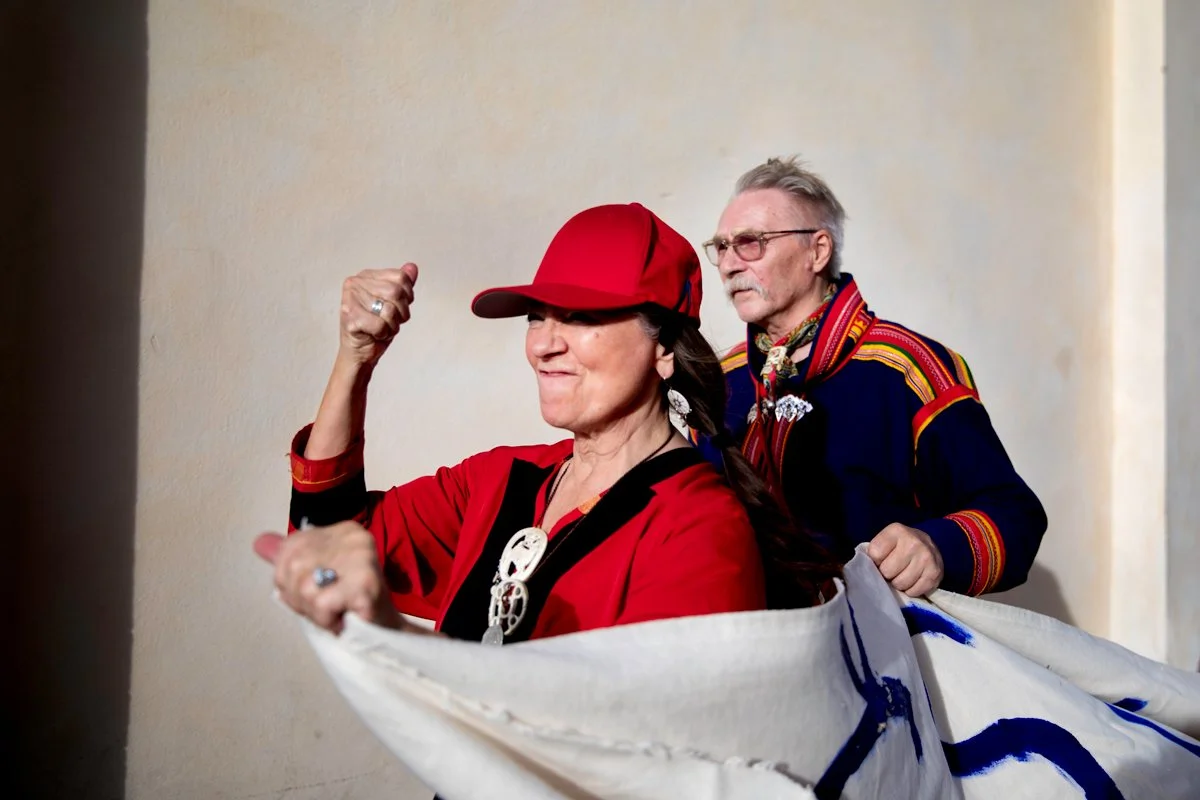
Munich's municipal utilities SWM have been known to greenwash their energy supply. While Munich's gas power plant emits on a daily basis, bought windparks outside of Germany are used to "offset" these emissions and their consequences. Furthermore, these windparks are built on the ancestral lands of Europe's last indigenous people, the Sámi, in direct violation of their human rights. The SWM, thus, engage in green colonialism! From May 20-23, Sámi artists and activists will come to Munich to defend their rights and teach us more about their culture and struggle.
Climate Crisis Fueled by SWM
The SWM have one of Munich's largest carbon footprints. In 2023, they emitted around 3.500.000 tons of CO2-equivalents, burning gas and coal. Just the SWM's estimated carbon-emissions until Munich's "climate neutrality" at around 84 mio tons exceeds the entire city of Munich's residual carbon budget for 2022, which then was at about 55 mio tons CO2e. To put it in less technical words: The SWM are one of Munich's major contributors to extreme weather, sea level rise, heat waves, crop failure, displacement, and death.
So how can the SWM claim they produce 100% renewables for their customers when we have no other option but to consume the fossil energy that is produced locally? The SWM trick the public with calculations. While they barely develop renewable facilities in and around Munich - although Munich could be powered mostly by local geothermics - they buy European renewable projects. They then claim, this makes up 100% of Munich's electricity needs.
Green Colonialism at the Expense of the Sámi
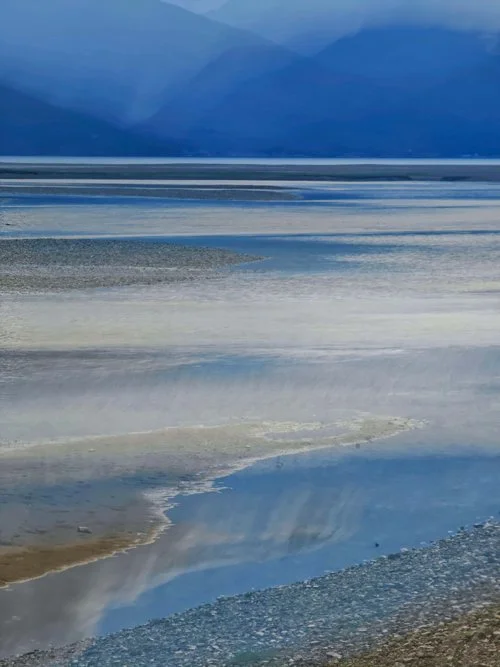
The SWM's wind projects Fosen and Sørmarkfjellet are in Sápmi, the ancestral lands of the indigenous Sámi in North Scandinavia. The Sámi's livelihoods are based on reindeer herding and migration during the year. As the reindeers fear the turbines, this partly nomad way of life is encroached upon by foreign capital. These wind turbines act as physical walls and borders to the Sámi and their reindeer, causing interruptions to century-old Sámi migration paths, the separation of Sámi communities and even the displacement of entire communities.
A Norwegian court has followed the Sámi's appeal and claimed the SWM's windparks are illegal and 151 wind turbines must be taken down. No such action has occurred so far and the human rights violations continue.
From Sápmi to Munich: Resistance against SWM's green colonialism
We, a group of local actors, Sámi artists and activists, will bring resistance against green colonialism to the SWM's front doors from May 20-23. We demand the SWM take down their windparks in Sápmi, close Munich's gas power plant and build local wind and solar parks and geothermal utilities instead!
Come join us for our camp at Königsplatz/Tunix Gelände, X event, Y event, and the demonstration on X at Y.Description text goes here
-
Move through this space thats unfolds like a Sámi yoik:
there is no beginning and no end.
Every section, every node, traces encounters and relationships, reflecting Indigenous ways of knowing that honor connection, movement, and cyclical flow.


Click any node to uncover fragments from the inquiry, spanning from 2021 onwards….
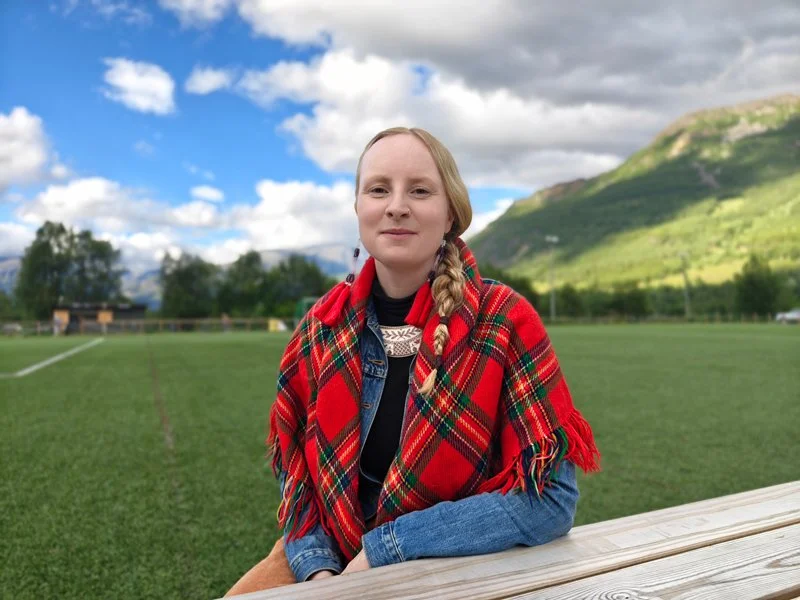
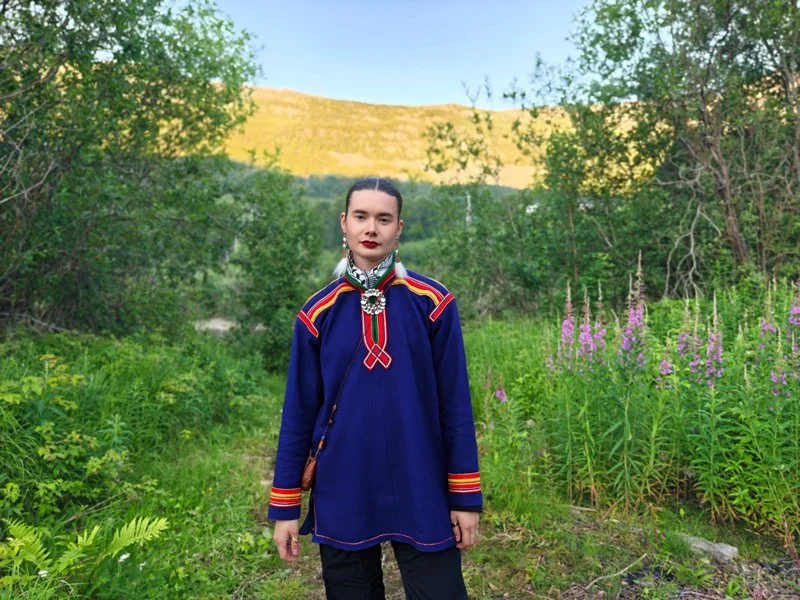
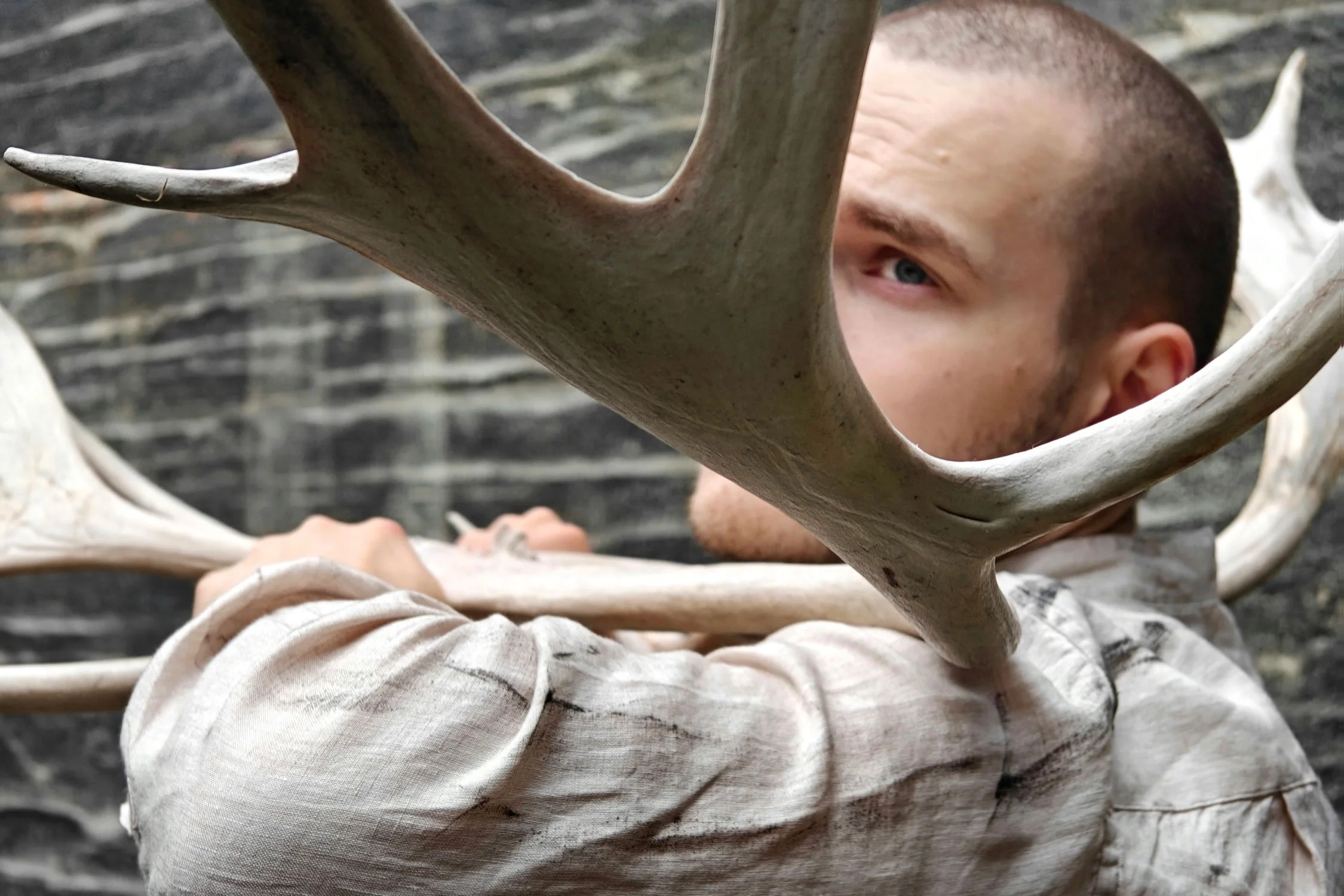
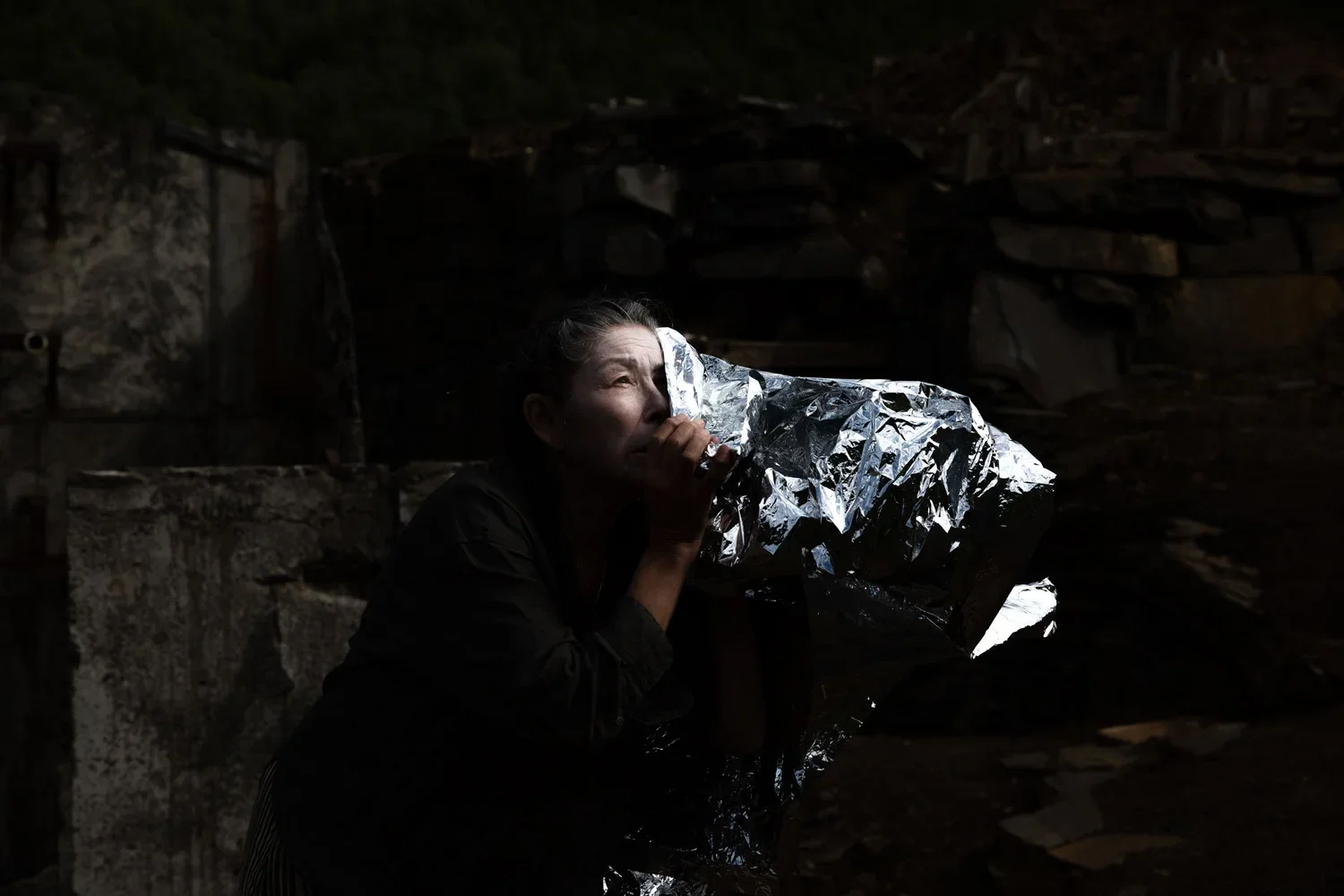
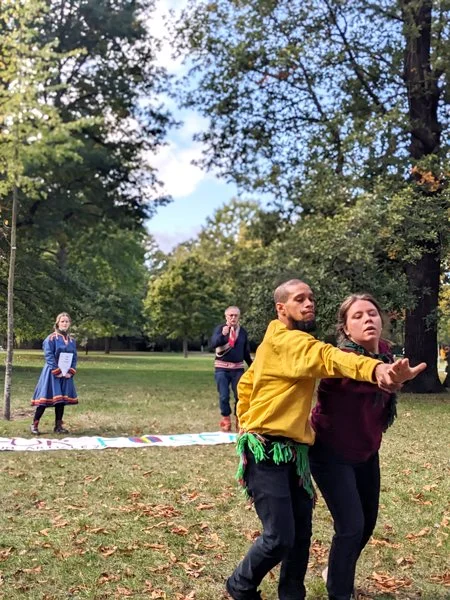
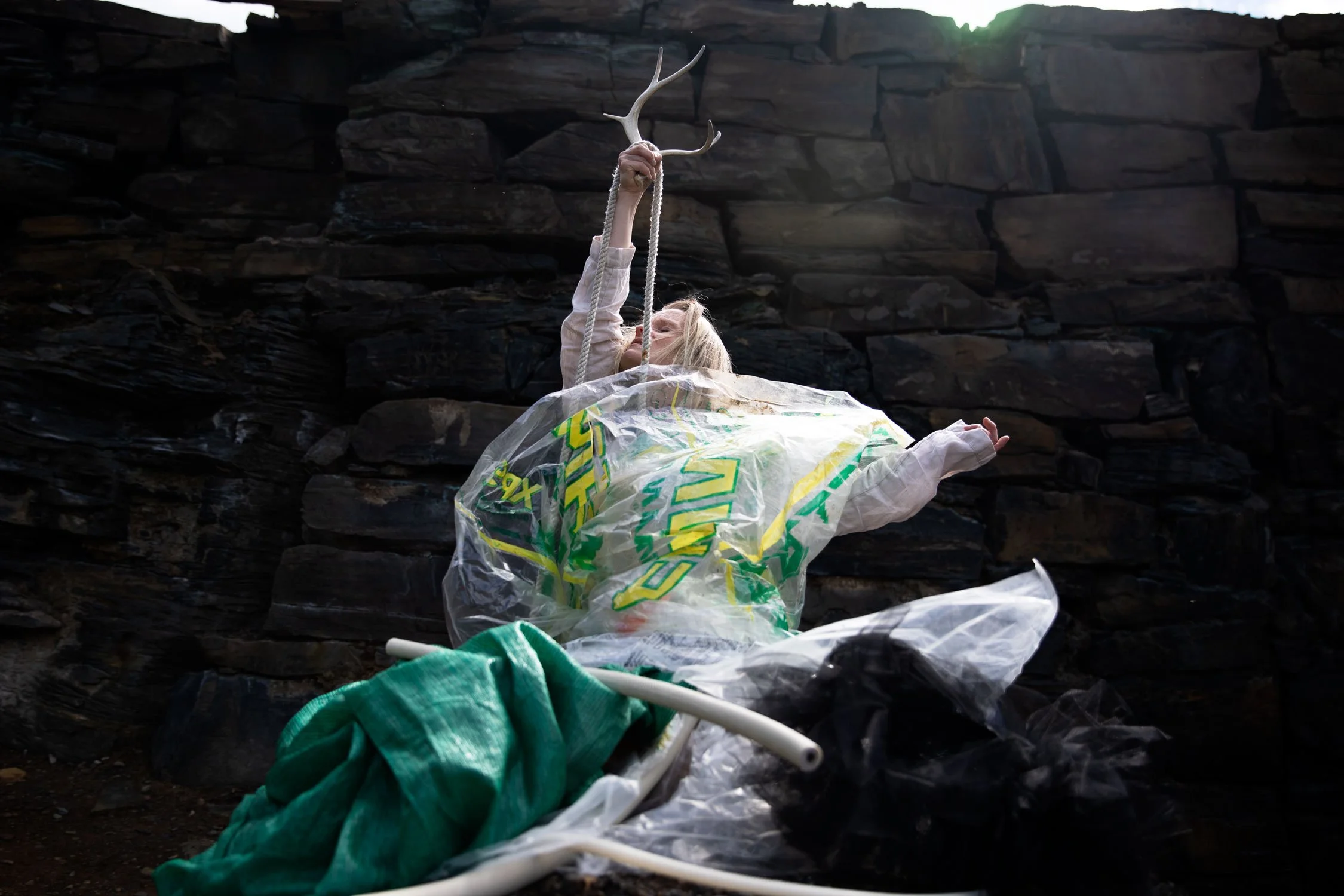
In October 2025, Electric Lies: ČSV Project came together in Nuuk, Greenland in collaboration with Suialaa Arts Festival and Sámi Lávdi.
WE ARE STILL HERE!
Twelve Sámi and Inuit artists from six countries met to discuss pressing issues affecting their communities.
The project culminated in a performance at the Suialaa Arts Festival, bringing together Sámi and Inuit cultural expressions and highlighting the vital presence and resilience of Indigenous peoples in the Arctic.
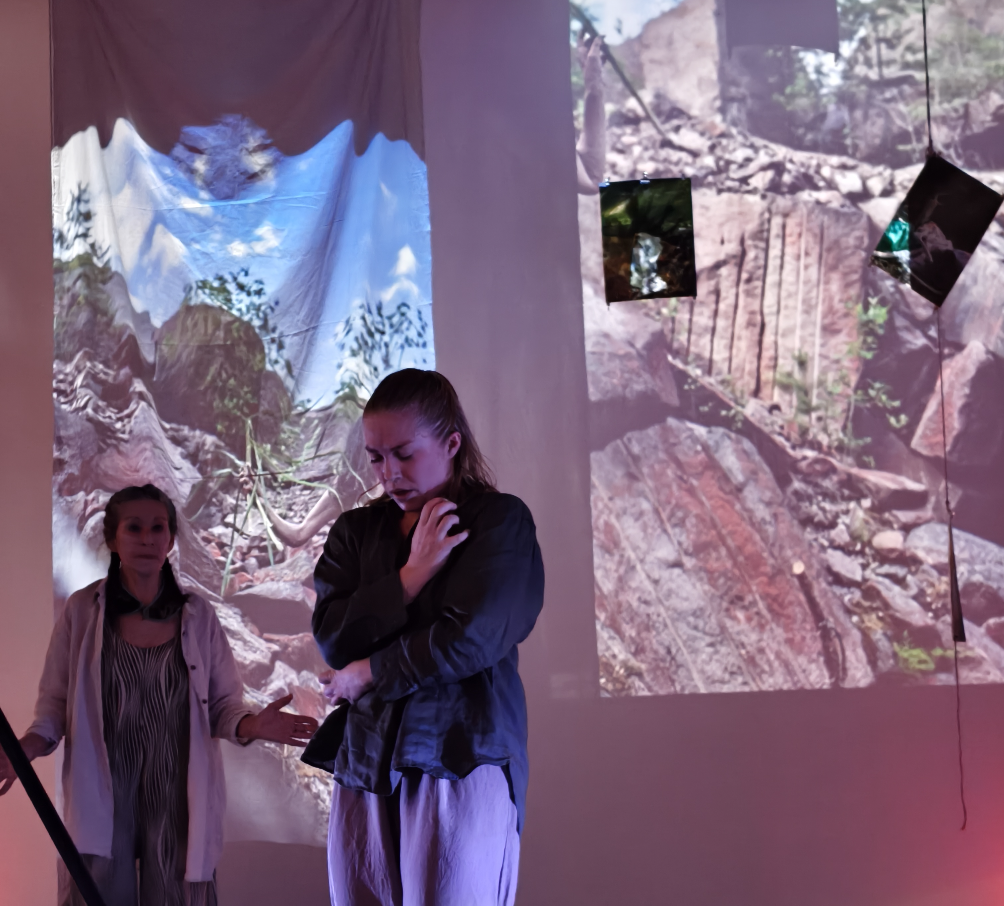
Electric Lies: Broken Ground was presented as part of the inaugural program during the opening of Jillat Sámi Dansesenter the world’s first Sámi dance center in Vuollerim, Jokkmokk municipality, northern Sweden. Over the 15th and 16th of November 2024, it unfolded as a space for dialogue, exchange, and shared reflection, bringing the group together with other Sámi artists and communities.
In Tromsø, as part of Vårscenefest, Electric Lies: ČSV Project brought together ten Sámi performing artists from Norway and Sweden for a week-long gathering in May 2024.
Supported by Barentssekretariatet and in collaboration with Sámi Lávdi, the gathering became a space to share knowledge, confront urgent realities, and shape an activist performative journey.
Defending Sapmi
This video draws on archival materials and fieldwork conducted during the 2024 visit to Saprmi to highlight Stadtwerke München, Berner Energiegesellschaft, Energy Infrastructure Partners (Zurich), Aquila Capital (Hamburg), Nordic Wind Power DA and Aneo- involved in the destruction of nature.
The film was presented in the“Balakake: Meeting of Peasant & Rural Struggles” festival, held from September 1–7, 2025, in North Saxony, Germany.
This video made by Group Against ''Green'' Colonialism In Sápmi, @ March 2025Eva Maria Fjellheim
Eva Maria Fjellheim is a southern Saami academic, activist, and radio documentary producer working on decolonial struggles and solidarity across Indigenous geographies.
Sami poet and activist, shared her journey during our fieldwork in Norway :
‘‘My family got assimilated when we lost connection to the land.
When you steal the land,
you steal everything."
Ida H. Benonisen


Electric Lies:Broken Ground

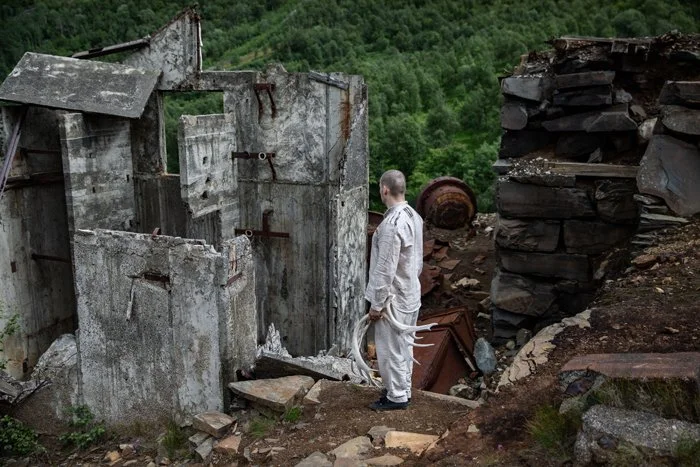
Building on the earlier group residency in Saari at Myänämäki, the inquiry expanded across Sápmi, following the trajectory of reindeer herding and deepening our understanding of ongoing struggles over land and rights.
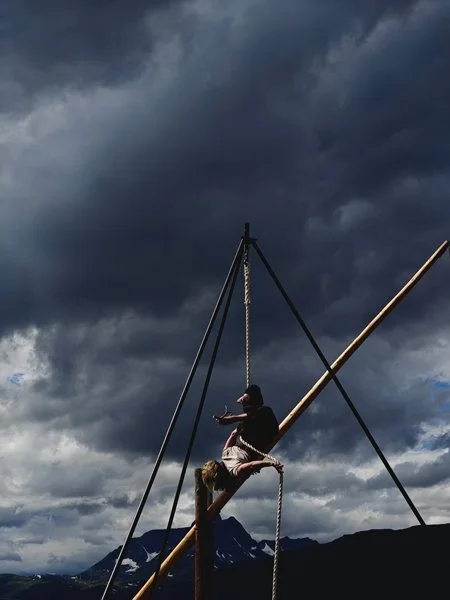
We traced changes in Karasevando, Sweden with reindeer herder Lars Henrik Larsen, and its surrounding areas with Sami artists like Britta Marakatt Labba before culminating in a group performative installation at Nord Troms Museum at Skibotn, Norway.
We engaged in dialogues with local communities to identify and critically examine the companies complicit in green colonialism in Sápmi.
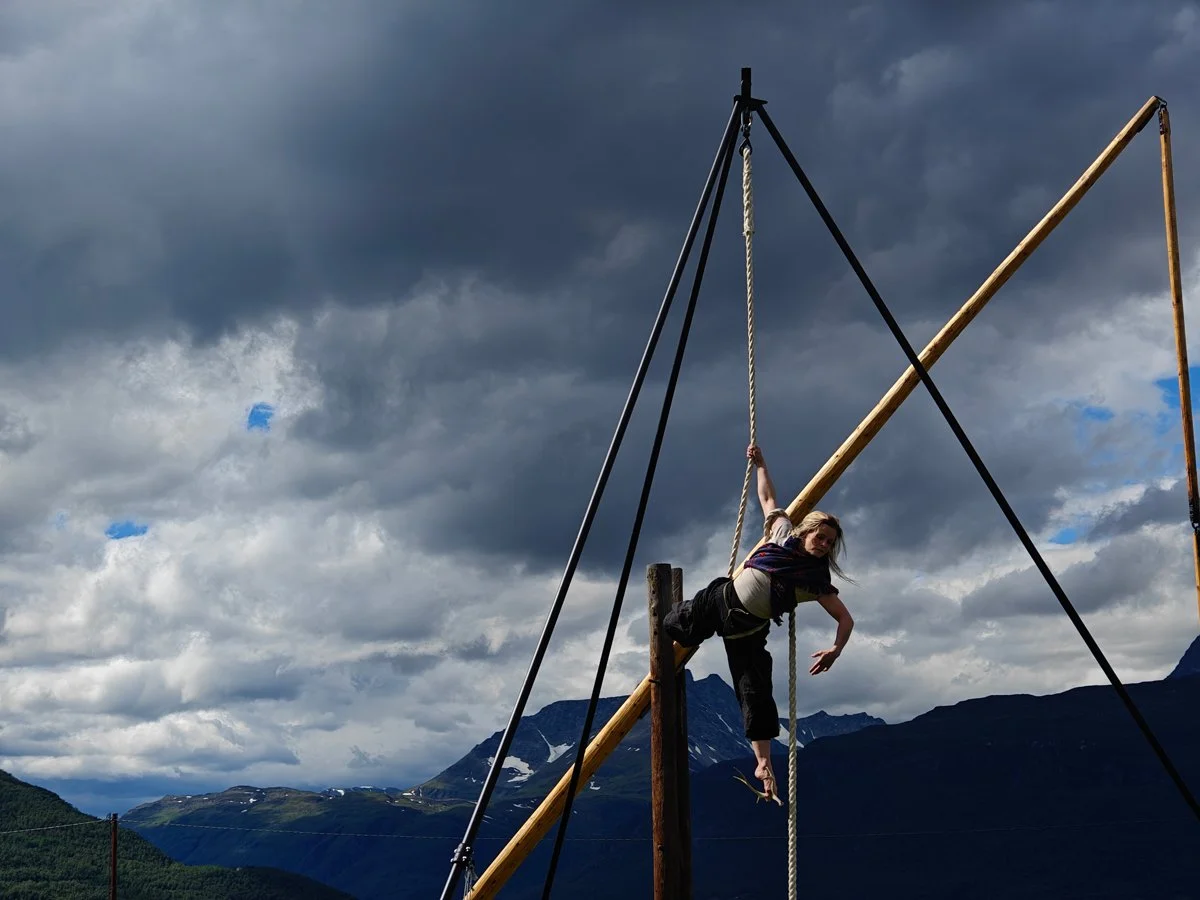
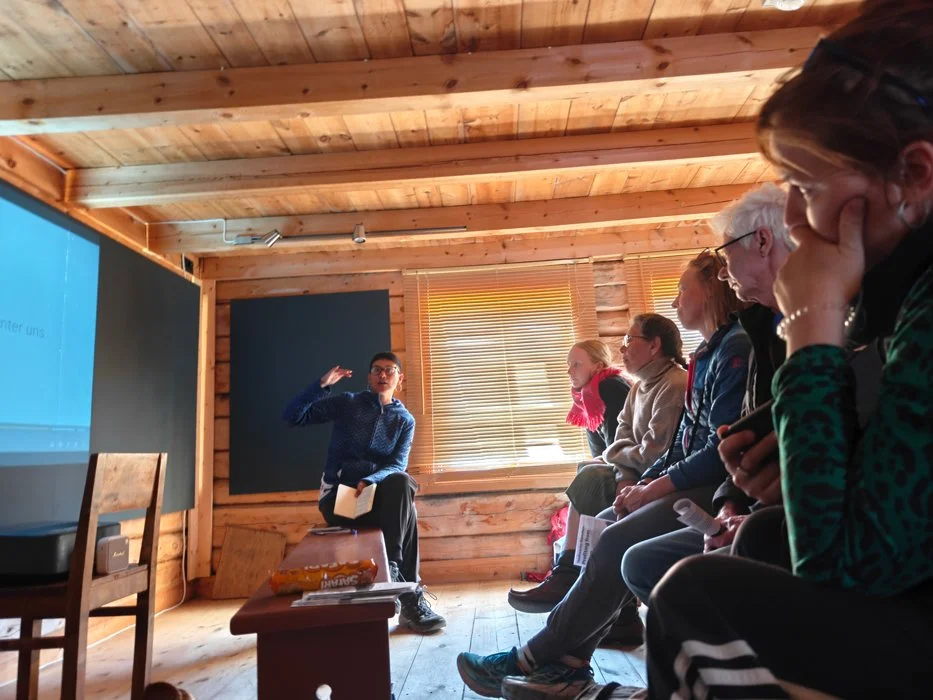
-
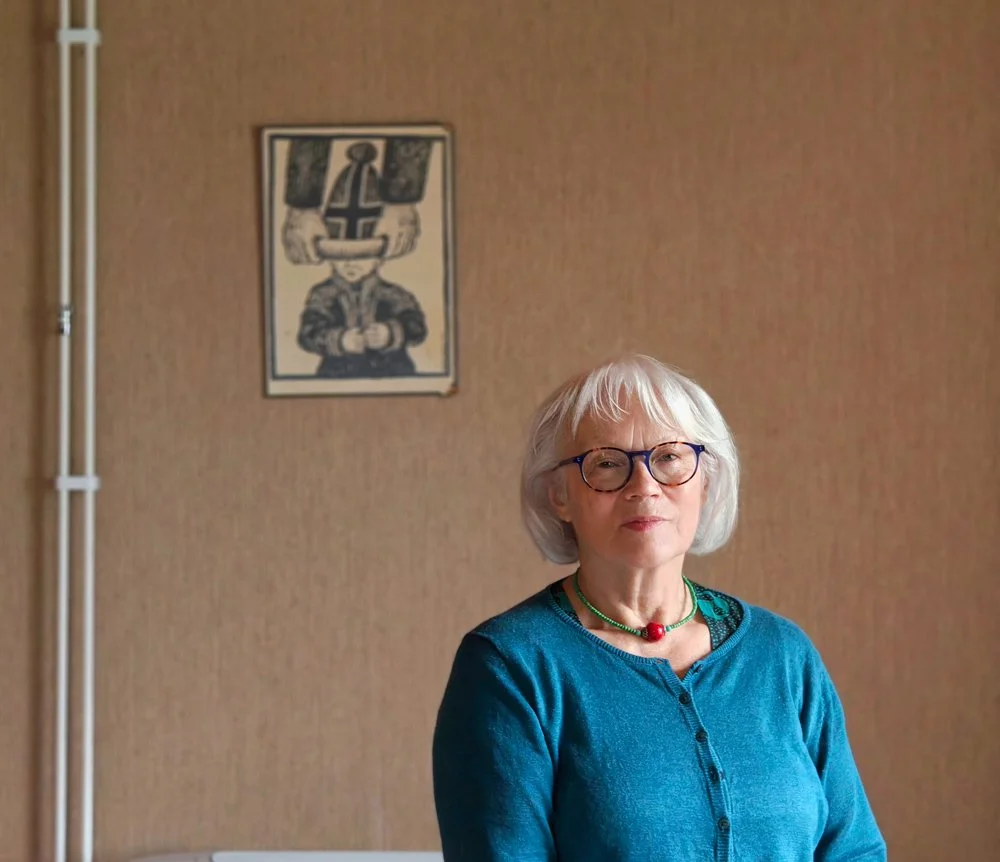
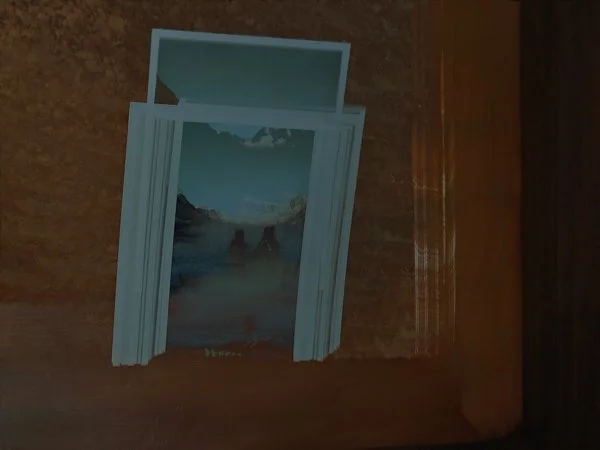
As part of the Sámi artist collective known as the Mázejuavku (Máze Group) from 1979, Britta participated the Alta protests, which opposed the hydroelectric development of the Àltà-Guovdageaidnu/ Alta-Kautokeino River system that threatened to inundate several communities and large reindeer grazing areas. She also helped co-found the Sámi Artist Union (SDS) in Johkamohkki/Jokkmokk in 1979 and sat on its board until 1984. Thus, developing an infrastructure that could showcase Sámi art, making it accessible to a wider audience, as an essential part of her legacy. Marakatt-Labba's work is not only part of the revival—but is also a direct catalyzer for it. In her work—a labor of love of sorts—she turns Sápmi into a horizon from where it is possible to gaze out upon the rest of the world. It is, after all, in the Arctic that many of the major issues of our time play out: the climate crisis is more palpable here and the extraction of raw materials is drastically increasing under the socalled “Green Transition,” which itself infringes upon the rights of the indigenous peoples, to their lands and ways of living. Their age-old belief that land is only ever on loan and that there is an obligation to maintain nature’s balance stands in stark contrast to the reality of that balance being broken. From that, we should pause and note that some of the figures in Historjá wear blue hats, a color that in the artist’s area stands for grief; what is happening to Sámi culture? To the planet? Plants and animals talk to all human beings, but the question is who's listening. - @Maria Lind from The Future of Sápmi
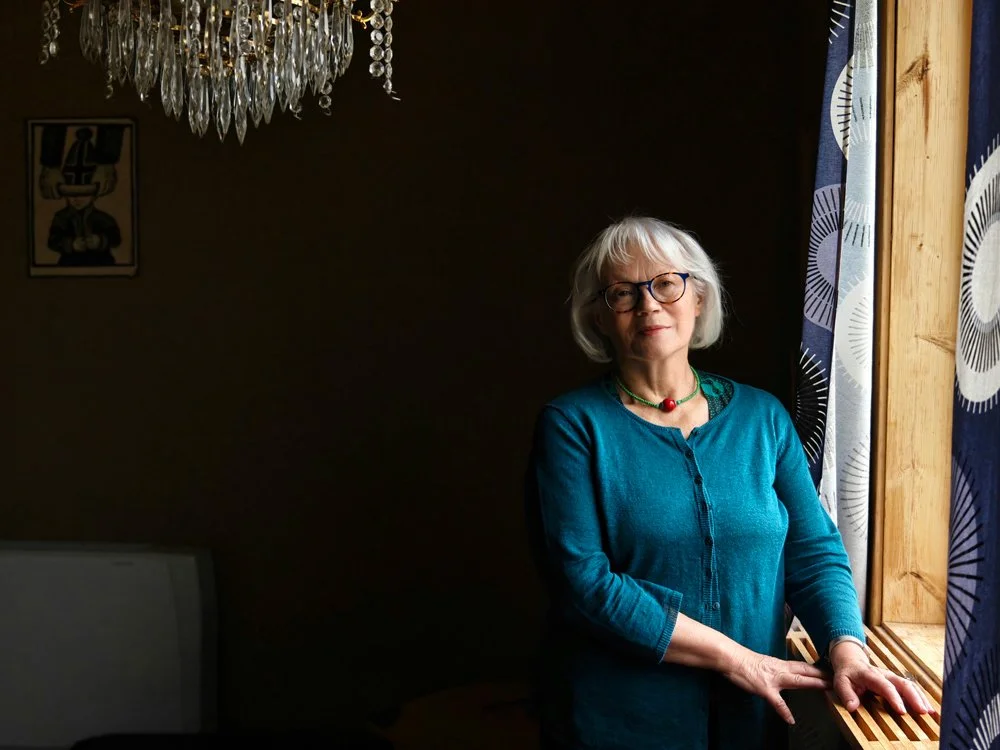
Britta Marakatt Labba
Over 40 years, Britta Marakatta Labba’s embroidered stories depict Sámi life and everyday experiences, but also tell of state oppression and nature under threat from exploitation.
Saari Residency,
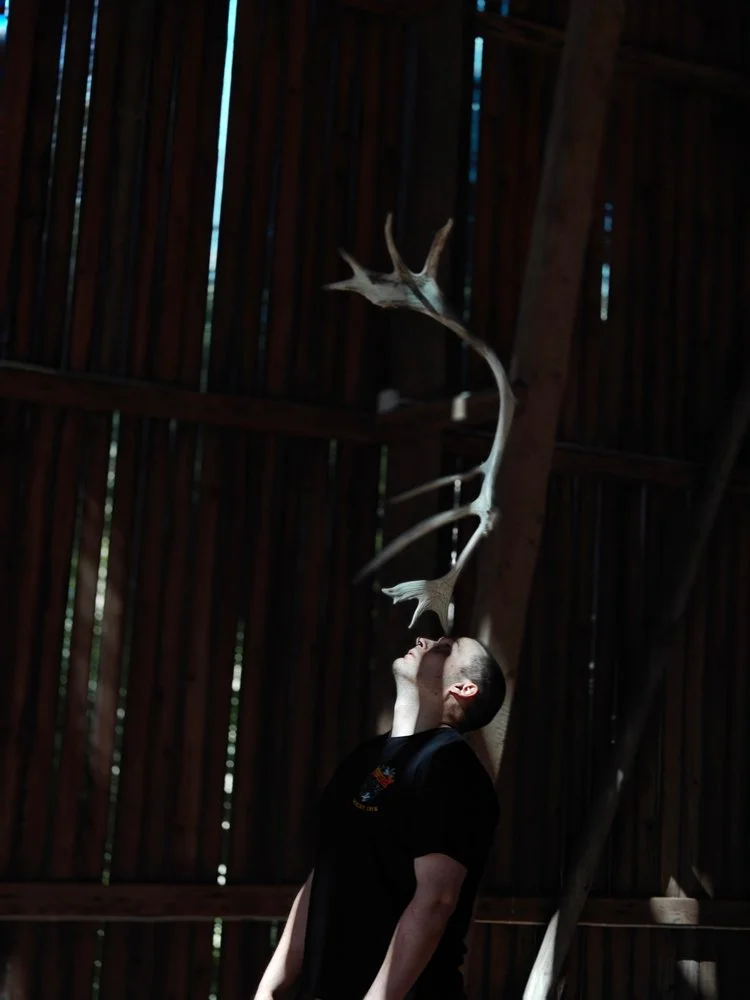
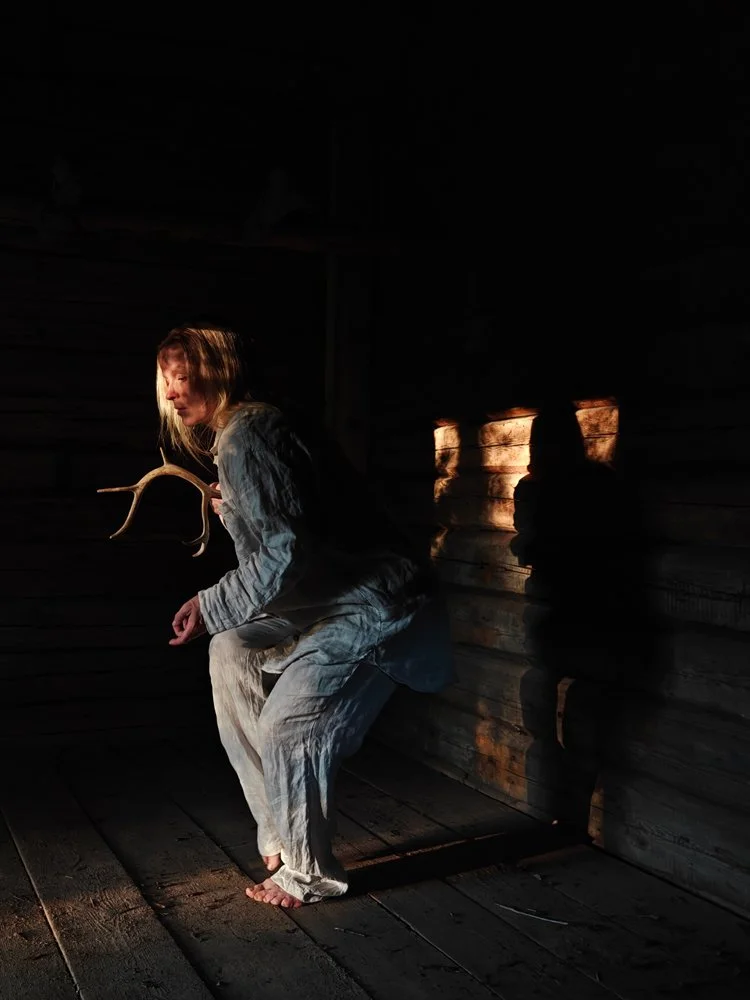
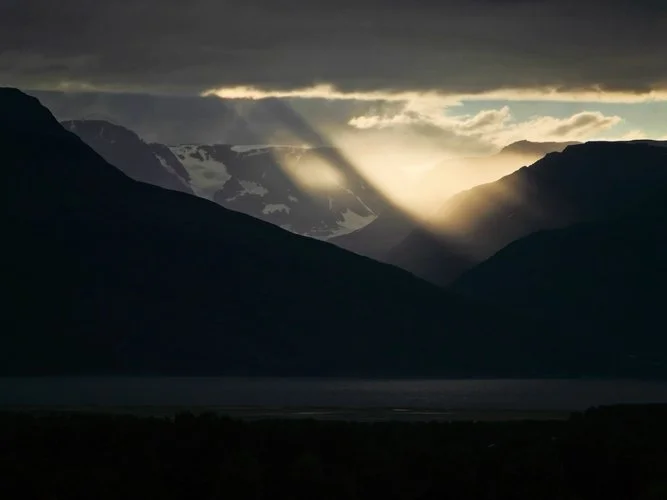
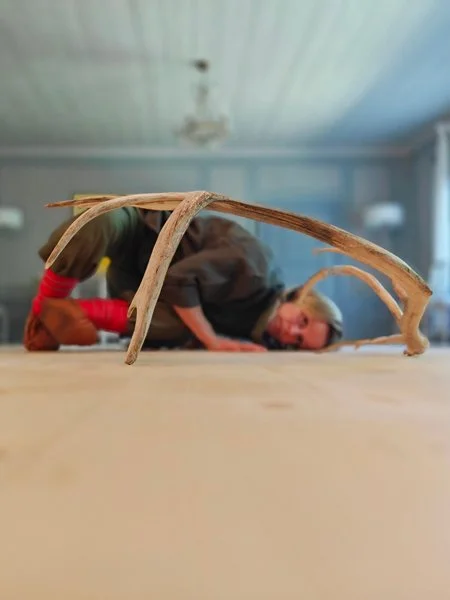
In 2024, the Electric Lies group reunited at the Saari Residency in Finland for two weeks, sharing insights on their relationships to the land and their diverse practices. They explored how creating and holding space can shape individual and collective paths, addressing structural inequalities, consumption patterns, and environmental concerns.
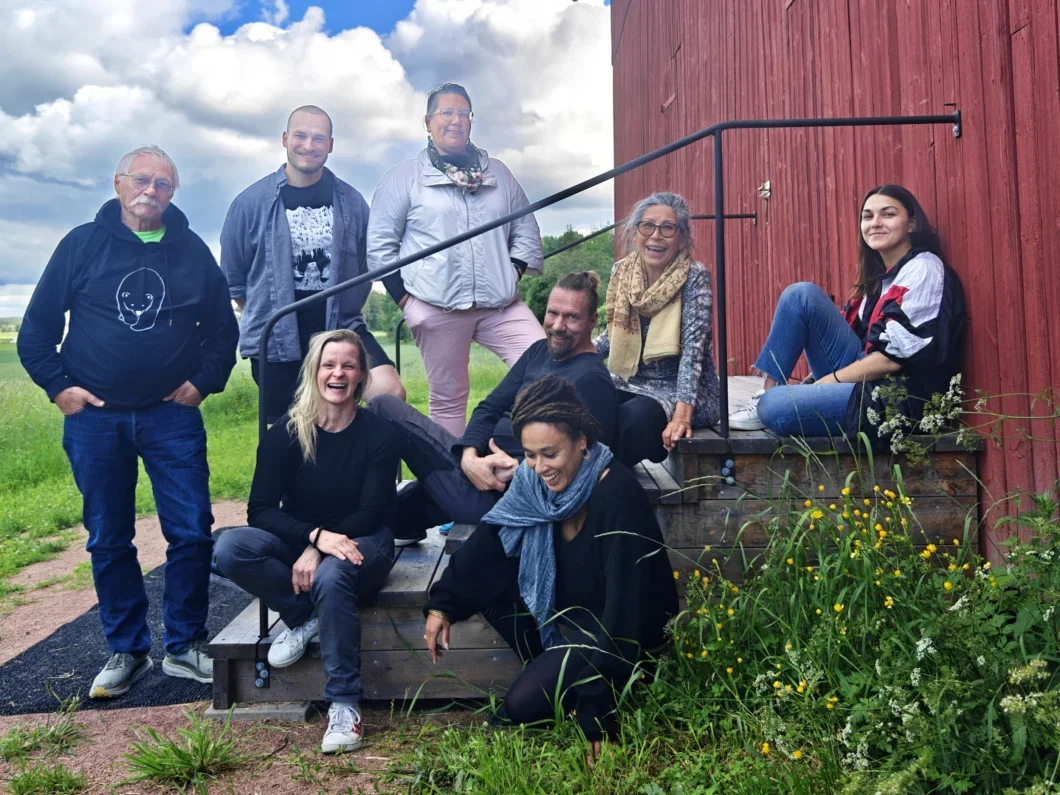
Participants included Lars Henrik Blind, a Sámi Joik singer and reindeer herder; DarleneNaponse, an Anishinaabe filmmaker and activist; MaritShirinCarolasdotter, a Kurdish Sámi dancer; ElizabethHeilmannBlind, a Greenlandic Inuit actress and dancer; Aleksi Niittyvuopio, a Sámi juggler; TuoumasRoukan, a Finnish musician; CamillaThereseKarlsen, a Sámi artist , MadhumitaNandi, an Indian artistic researcher.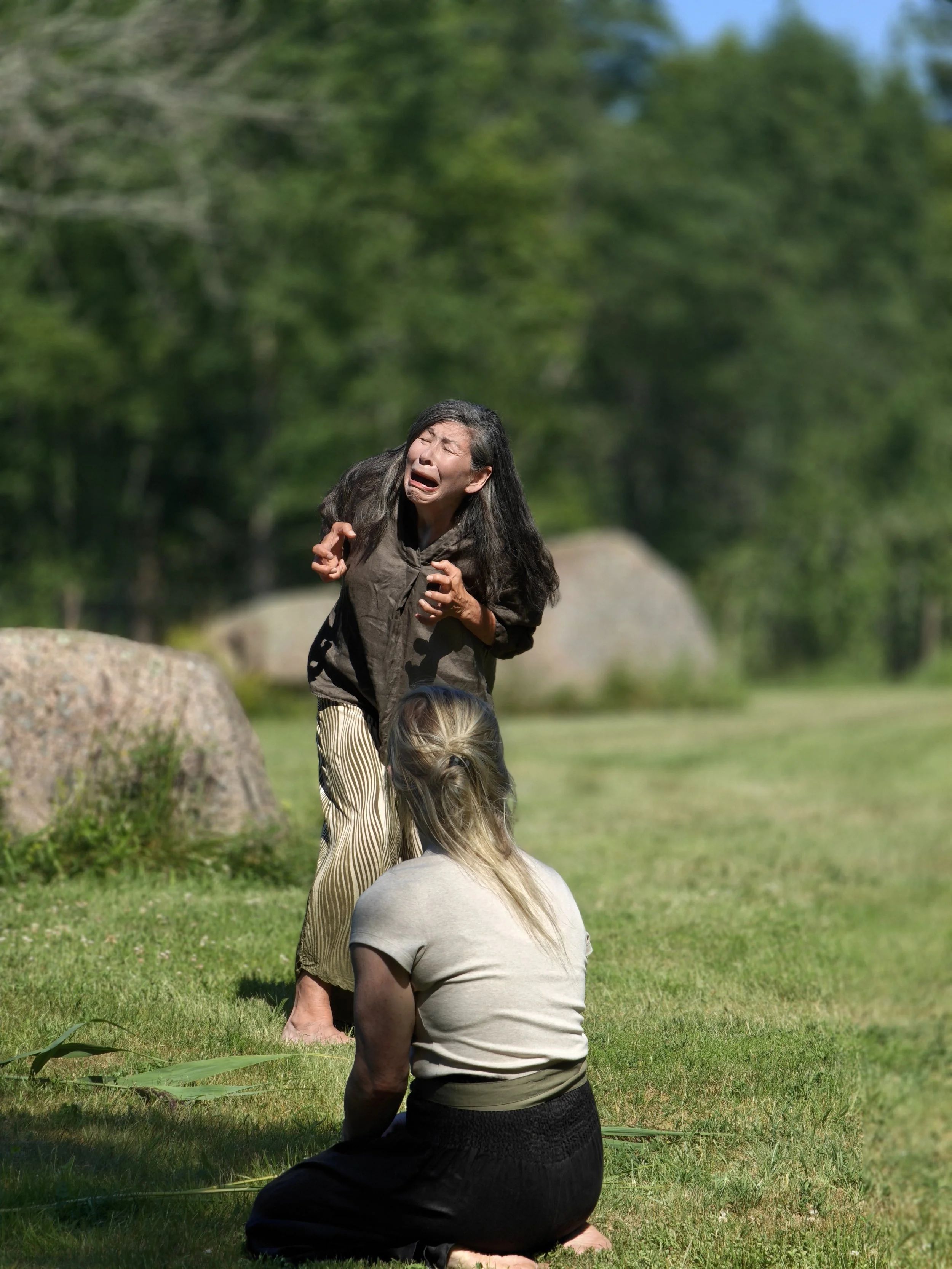
ČSV
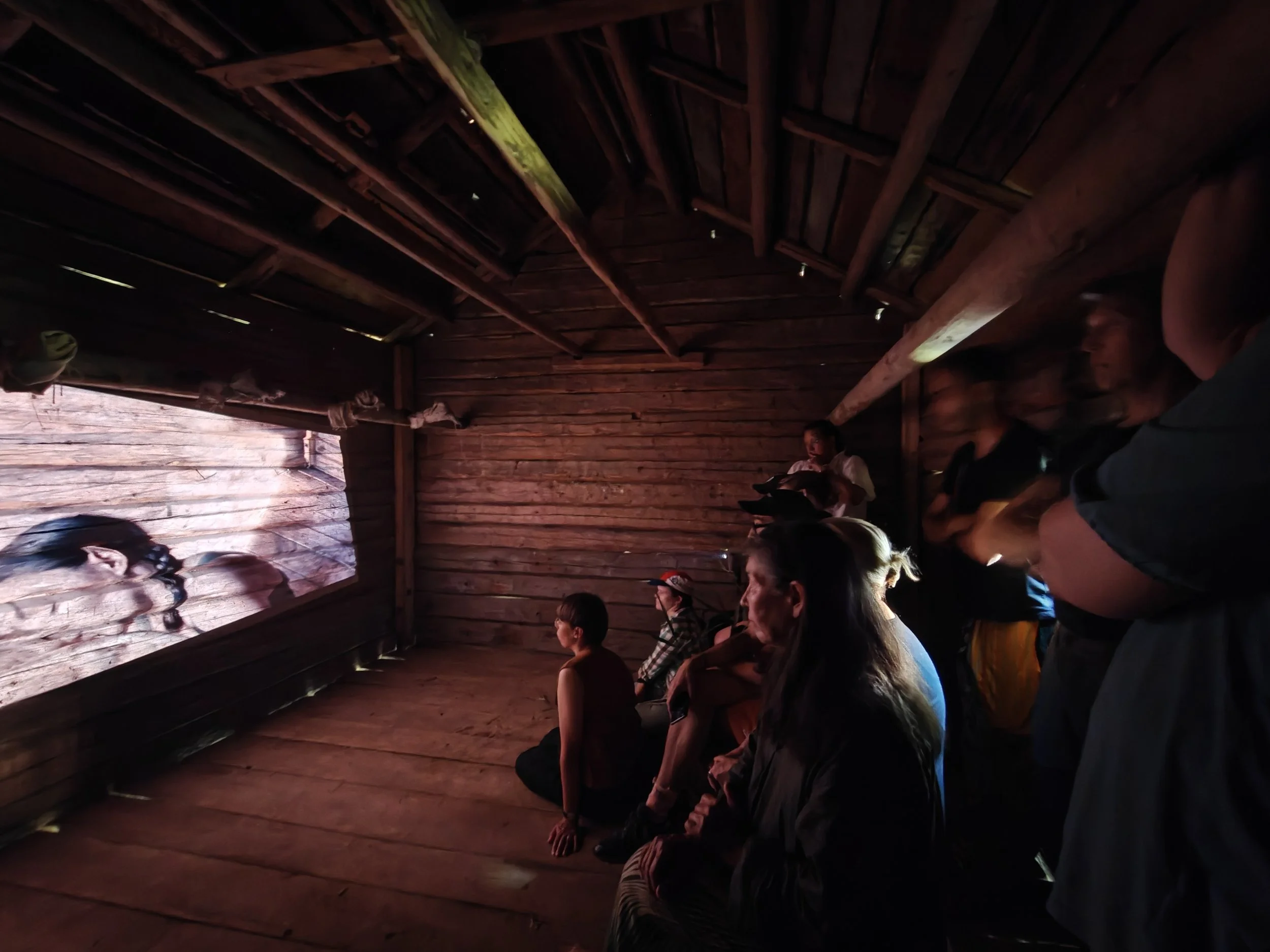
The performance intervention ČSV is the result of the residency of Nordic and German artists at Oyoun. In this unique performance, traditional Joik singing, poetry, mask dance and contemporary dance are combined to create an impressive work. The aim is to educate the audience about the socio-political situation in Sápmi and at the same time to make them think. This performance intervention combines artistic expression with an important social concern and conveys the important message about the challenges and resilience of the Sámi community.
*These letters have many meanings, one of which is "čájet sámi vuoiŋŋa", which translates as "showing the Sami spirit" and is often used to promote Sami identity and activismIn 2023, Electric Lies took form in Berlin as a gathering, of voices, of urgencies, of lands that echo far beyond the city. Artists from Sápmi, Greenland, and Latin America came together to trace the fault lines of so-called green futures, where Indigenous worlds are displaced in the name of protection.
Over the course of a week, the residency unfolded as a series of gestures across Berlin, public interventions, quiet disruptions, moments of witnessing. Workshops, screenings, and conversations became spaces to listen, to remember, to resist.
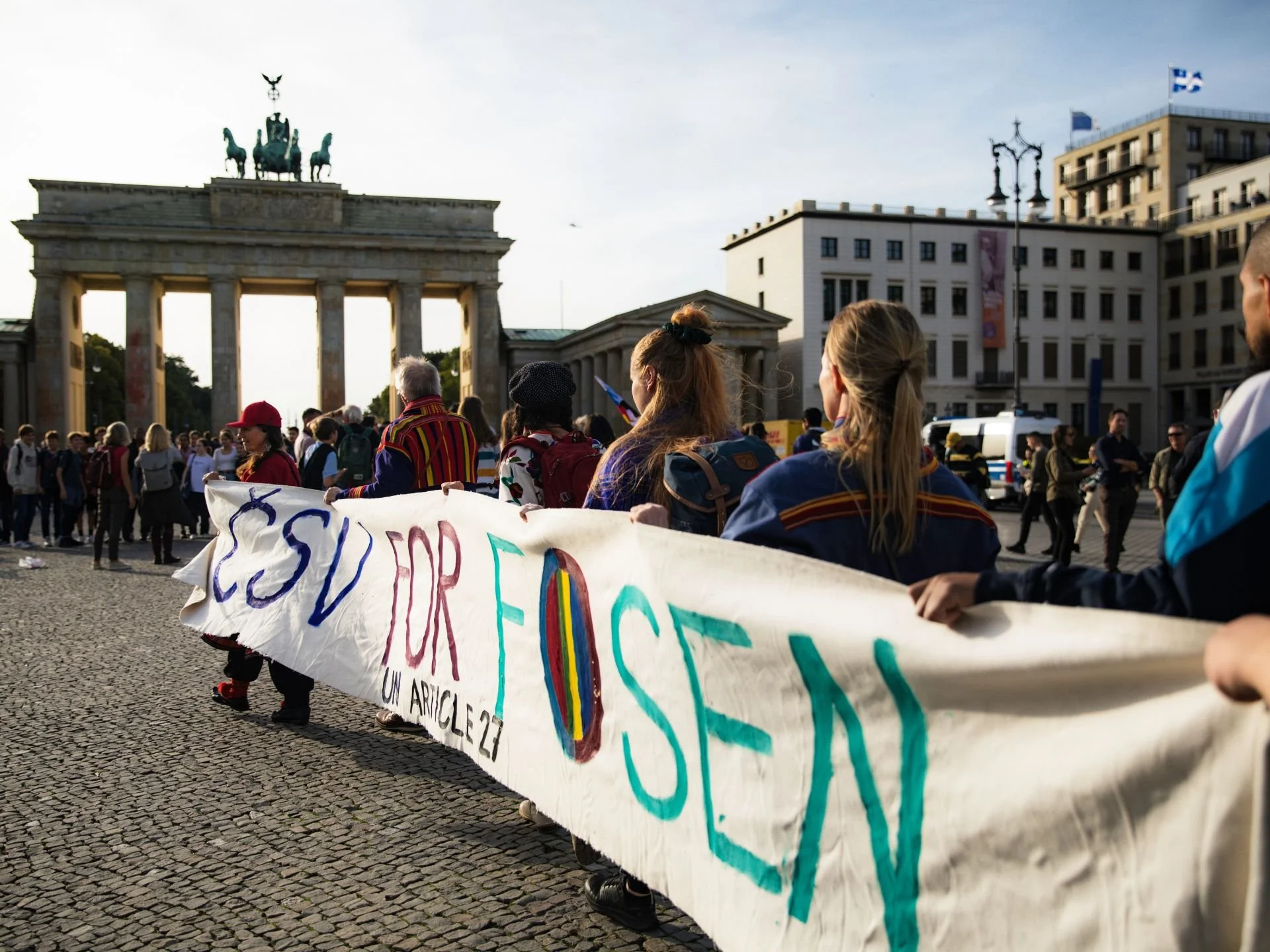
It began with a protest in Berlin with the artists stood in solidarity with Sámi communities demonstrating in Oslo, where reindeer pastures have been cut through by wind turbines. Their voices carried the weight of a ruling October 11, 2021 when Norway’s Supreme Court declared the Fosen turbines illegal, acknowledging the violation of Sámi rights, even as the structures remained.
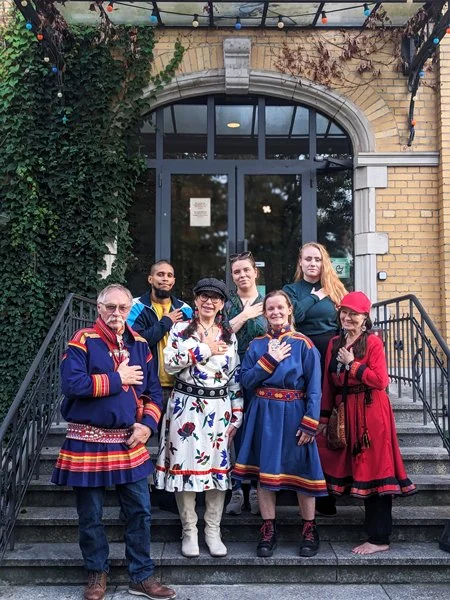
Article 27 of the United Nations requires the establishment and implementation of procedures that recognize and protect the rights of indigenous peoples to their lands and resources.
Violations of this affect every indigenous community worldwide!
Camilla Therese Karlsen, Elisabeth Heilmann Blind, Lars Henrik Blind, Marika Renhuvud, Liv Aira, Luis Bogado and Asta Mitkijá Balto in Berlin October (2023). Stadtwerke München:
Profiting from
Green
Colonialism
In 2022, the norwegian Supreme Court ruled that the operating permits and expropriation authorisations given for the construction of the wind parks. Despite this, the wind parks continued to operate. Sami people continued to oppose the projects through demonstrations and blockades of government offices and Stats- kraft. Almost two years after the ruling, Statskraft agreed to pay the southern Sami communities affected by the parks 7 million Norwegian crowns. However, this can never compensate for the destruction of the land and the continued disruption Sami lifeways. The Norwegian government issued a formal apology to the Sami people, an empty gesture which had no effect on the wind parks. Sami people continue to insist that the wind turbines must be dismantled.
The court ruling, the apology by the Norwegian government, and compensation payments, are attempts by the Norwegian state and capitalist enterprises to give impression that they take the concerns of Sami people seriously. These tiny morsels of recognition are intended to get people to accept non-solutions that leave colonial developments intact, to keep resistance under their control, and to prevent people from turning to means of struggle that are not mediated by the state.
Electric Lies
Camilla Therese Karlsen and Lars Henrik Blind in Berlin-
-
by Eva Maria Fjellheim and Florian Carl
The German owners of the Oyfjellet wind project, Aquila Capital, have already made a lucrative deal to supply the power produced by the wind plant to the nearby aluminium smelter by Alcoa. On the project’s website, the developers claim to “promote growth, green industry and green employment through long-term investment in renewable energy”
Click to read the full article
In 2021, Electric Lies emerged as an urgent artistic intervention by Sámi artist Camilla Theresa Karlsen, in dialogue with Madhumita Nandi during the early conceptualisation of the Listening to the Land initiative at Oyoun.
This urgency is rooted in ongoing struggles across Sápmi, where so-called “green” capitalist projects have long been met with sustained resistance from Sámi communities. In 2010, Norwegian authorities granted licenses for four wind parks in Fosen, dismissing the objections voiced by Sami people. In response, they initiated a legal action against two of the wind parks, which did not prevent them from being constructed by 2020.

Supported by